
Life in the Himalayas
I have just spent the last month in India, primarily in Ladakh, to fulfil a dream, to camp with the Changpas, a nomadic pastoral community situated in the Chantang region of Ladakh. At 4500 metres above sea level this important grazing eco system, is part of the western region of the Tibetan plateau. I have visited their summer camp several times before, just for a day each time, but to submerge myself into their daily routines, and experience a way of life so remote has captivated me. My love of textiles, natural fibres, spinning & weaving have led me here, to connect with a way of life that produces one of the most finest, luxurious fibres in the world, yet can only be produced by living in one of the remotest regions of the globe, requiring a way of life so lacking in what we consider basic comforts, the irony confronts my senses.

Yet, having just experienced a few days with these people, who live in complete harmony with their natural surroundings, I question deeply what we have gained from all this consumption of stuff and our never-ending yearning for more and more. We praise ourselves for our efforts, recycling the constant plastic, yet we do not have a clue what it means to live sustainably. Everything these people produce from the yak dung for cooking & keeping warm, to the animal skins for producing curd, the wool fibres for rugs and clothes, the milk, turned into butter & cheese, dried for the winter months, a dairy rich diet for substance and warmth… a way of life that has changed little over hundreds of years.
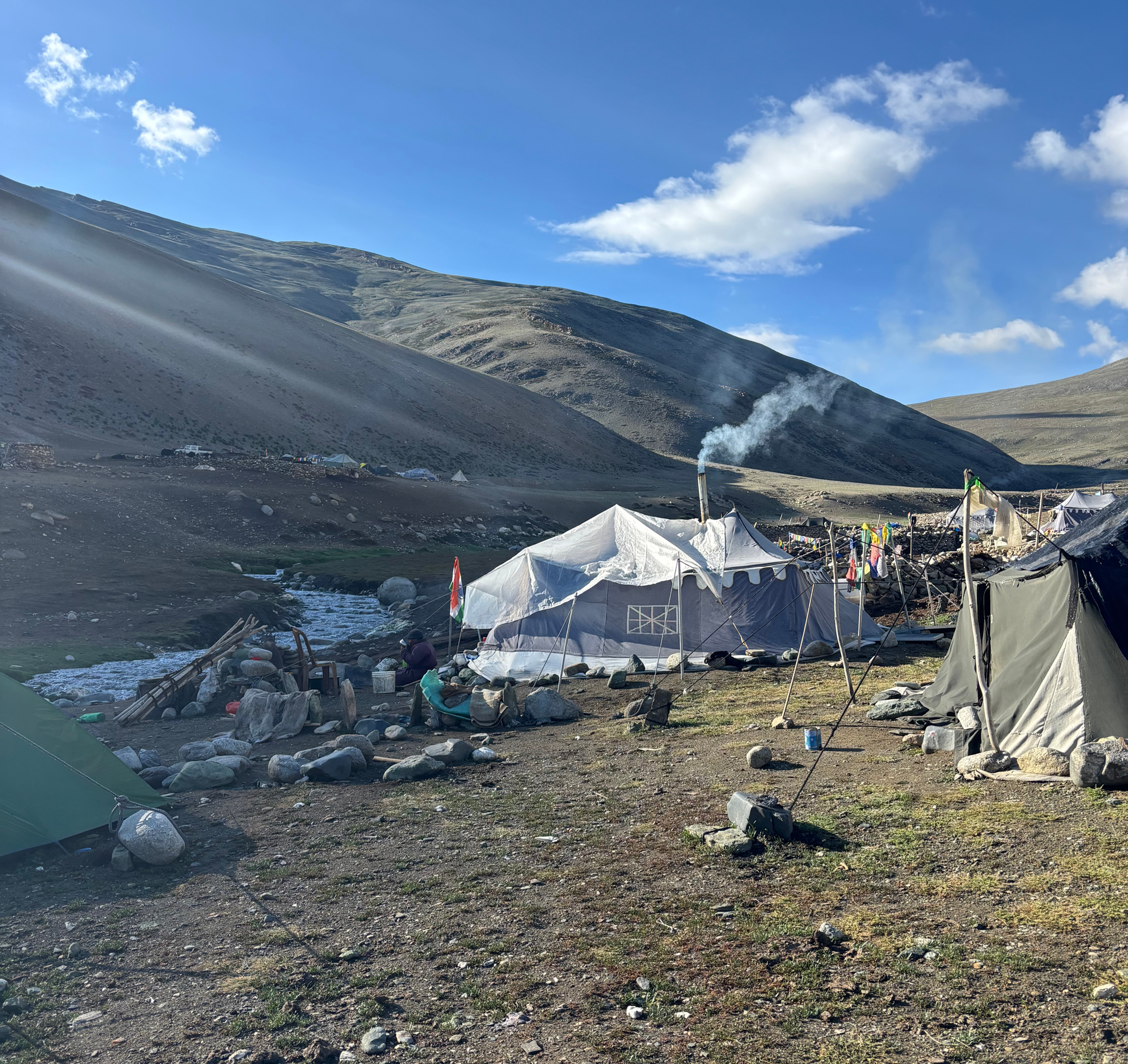
I spent a week, in this stunning harsh environment, certainly not long enough but sufficient to capture a tiny glimpse, into their existence. Challenging, humbling, beautiful and a truly precious gift. Friendships were made; we shared something… simple yet deeply touching.
I must confess I started this newsletter last week, eager to share my experience, but as the news and images came in from Nepal of the heart-breaking floods, of lives literally being washed away, it bombarded my senses… I stumbled over my words, my thoughts, and even now I’m still struggling to process… turning away from the horrors of social media imagery while the people of Nepal who lost everything must face the horror of their reality. Living in a fragile environment, and paying a price, no one should have to pay for, the greed of mass global industrialisation. I literally have no words, all I have is prayer.
This part of the world, the mighty Himalayas have always captured my heart. I spent many months travelling through Nepal in my back packing days, trekking and exploring the incredibly landscape. Ladakh has become the place where I nourish that part of my soul. The rocky desert terrain instead of the lush terraces of Nepal, but the people share the same, warm vibe, welcoming, shy and strong, hardy tribal mountain people of the Himalayas.
Having the opportunity to spend, just a week with the Pashmina nomadic tribes of Ladakh, was without doubt, challenging, and precious. Hosted by Chonzom & Dorjay, my small tent parked next to their “Rebo” a traditional conical tent. Language was tricky while we worked out each other’s ways. I had absolutely no idea what was going to happen from one moment to the next, from mealtimes to daily activities, requiring me to let go and flow with the rhythm of the camp. No internet, no tv, no electric, just the sound of the stream, the animals, the wind, the rain, comings and goings of neighbours.

The camp situated in a narrow valley, the stream was high when I arrived, my tent was moved back in case of higher volumes of water due to the unusual amount of rain. The livestock; goats, yaks and sheep returned home in the early evening after a day grazing further afield over the valley’s protective peaks. The goats and sheep first, herded tightly into the safe stone walled pens for the night, briefly tied together by their horns for milking. The yaks seem to return on their own, chaotic running through the camp, through the tents, some shouting, sling shots used, eventually just as it went dark, each animal settled back into the rightful place. By 7.30pm the camp settles, 8pm the calls for puja, a daily communal chanting by the women of the camp, the men not long back from herding all day keep the fires going. The temperature quickly drops when the sun dips below the peaks, I snuggle into my sleeping bag, fully clothed, and surprisingly, sleep until about 4.30am, when the camp starts to stir again.

The yaks sitting just behind my tent breathe heavily, and milking starts again. 7am first breakfast, cup of hot water followed by Tsampa (roasted barley flour) soup with chunks of dried yak cheese at the bottom of the bowl.
Followed by sweet tea and biscuits, followed by 2nd breakfast of omelette & chapatti, followed by endless cups of butter salt tea, an acquired taste, but fortunately for me, something I genuinely look forward to. By about 9am Dorjay would gather his things for the day, bottles of milk and chapatis stuffed into his small backpack, along with his precious sling shot. The men head up the slopes of the valley with the goats, yaks have already left, dishes are washed in the cold stream, and buckets filled with a soft mulch of yak cheese, are carried to the roof top of the community centre, the perfect spot for cheese drying.
After more sweet tea, followed by the endless top up of salt butter tea, we started the curd processing. A goat skin sealed at the legs, milk poured through the neck opening, we shared the labour of rigorously rolling the bloated skin, until the perfect consistency was arrived at. Big stainless-steel pots were filled, kept wrapped in blankets under stone slabs in their tented homes, the milk kept moving into butter, curd & cheese. The goats & yaks are milked twice a day, providing the rhythm to the day.
After lunch of vegetables and thukpa, a Ladakhi stew, rugs woven on back strap looms through the summer months were finished. Wool pile woven on a cotton warp, in 3 sperate pieces, the design, traditional, embedded in memory since childhood, the colours natural browns, greys and cream. The 3 separate pieces usually magically match, maybe a few centre metres out, but with some tugging, made to fit. Chonzom, came with her pieces and to her utter amazement 1 piece was about 40 cm longer than the other 2, no anger, no frustration, just an acceptance… I spent the next 2 days pulling warp threads, inch by inch down the length of the piece, until the 3 pieces fitted and could be sewn together. My efforts were gratefully appreciated, and I sensed a change by the other women of the camp, an acceptance of my presence among them, maybe. I had at long last contributed something of value to them.

On my last day with Chonzom & Dorjay, the men of the village had a meeting, so the women took to the hills with the cattle, Chonzom remained in the camp and together the 3 of us made momos, or should I say, Dorjay insisted on rolling out the pastry, while Chonzom with her endless patience showed me the how to craft these little dumplings… together we laughed, we shared a moment so simple, yet with much understanding between us.
